
The Performance Equation
A quick heuristic that all accomplished authors know.

In his book The Inner Game of Tennis, Tim Gallwey describes a simple equation that determines performance: potential minus interference. Since I like math:
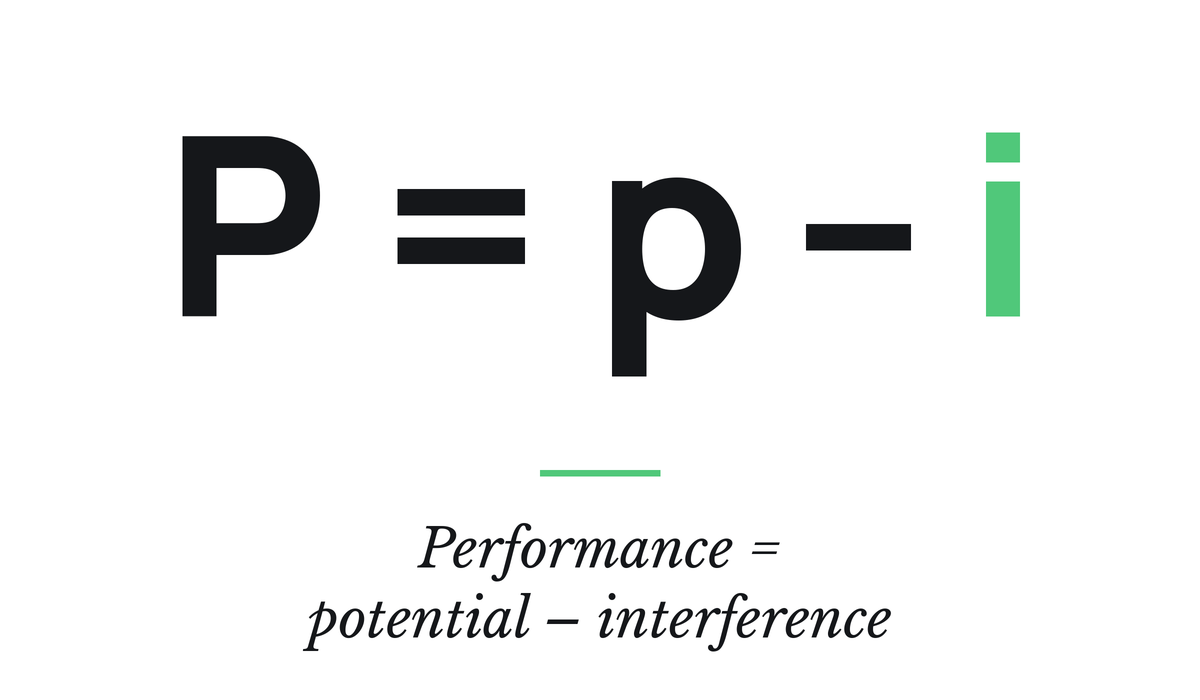
As it turns out, the formula applies even if you're not hitting services, forehands, backhands, and volleys.
No Half Measures
Over my career, I have had the pleasure of meeting dozens of successful nonfiction authors. Their topics, writing styles, and sales certainly vary, but they all share one key characteristic: they focus intently while writing and researching their books. Without question, each appreciates the value of—and need for—achieving a flow state.
As you'd expect, their individual concentration methods vary. Some authors go on proper writing retreats or digital detoxes. Others stay home, but wake up extra early when no one will bother them. (I'm unaware of any who go all Victor Hugo.)
The methods vary; the goal does not.
Differences aside, though, the writer always acts with purpose. They understand that producing a worthwhile text requires intense dedication. Put differently, they're minimizing or even eliminating the i in Gallwey's sage equation.
Priorities and Projects
Over the last few weeks, I've spoken to several prospective authors about working together next year. To be sure, they're vetting me, but I'm also vetting them. I need to know their priorities. The individual who believes that she can squeeze in an important and timely nonfiction book next year while concurrently juggling a dozen other significant personal and professional projects is deluding herself.
Meaningful prose and ideas don't stem from:
- Finding only a few minutes throughout the day or week to scribble down random notes. (To be fair, you should absolutely get it down before it gets away.)
- Starting a chapter without a clear plan. That goes double for an entire manuscript.
- Writing the beginning of a case study ten minutes before a meeting starts.
- Checking email, Slack, and text messages every five minutes.
- Respond to dozens of critical editorial questions while in an Uber to the airport.
 Phil Simon
What You Need to Know
Write your book however you want. It doesn't matter if you engage a ghostwriter, hire a writing coach, or try a DIY approach. In each case, know this: you'll need dedicated blocks of time.