
Adiós, Citation Hell
This new benefit for Racket Publishing subscribers is a godsend for nonfiction writers who care about proper formatting and despise manual work.
Earlier this year, I described how to use AI to format endnotes in a way that adheres to The Chicago Manual of Style. AI has evolved a great deal since then. Surely, I could build an even better mousetrap so many months later.
In today's post, I'll describe a way to save even more time while citing sources in your prescriptive nonfiction book.
The Perils of Self-Editing
I can think of no denser, less interesting, more sleep-inducing, yet essential book than The Chicago Manual of Style. (This one comes in a close second.) The 18th edition clocks in at—ready for this?—1,192 pages. If you want to know how to use a semicolon properly, you'll find it in there in excruciating detail. Only a true grammar geek would enjoy researching such arcane topics.
A good copyeditor will tell you when you're breaking one of the myriad CMOS rules and make the fix for you. Sadly, though, many self-published nonfiction authors eschew proper editors. In effect, these folks ignore the style guide altogether. As a result, their books look amateurish.
Errors will invariably appear in these books—or even plague them. Still, I understand the misguided mindset. After all, adhering to such detailed rules is downright taxing. Who wants to cite every endnote the right way?
For example, the custom Claude Skill took shortened URLs from the Reimagining Collaboration manuscript and turned them all into proper CMOS-approved citations:

The skill becomes even more useful when you consider the following mind-scratching fact: The Chicago Manual of Style treats different types of citations differently. Subtle differences exist when citing academic journals, books, podcasts, blog posts, magazines, and the like.
In a word, ick.
You may think that no one cares about such minutiae. Who's got time to look at citations, much less examine all of them for CMOS compliance?
Judges of book contests, for starters.
I know of an author who entered her first title in a book contest. The judge liked it but dinged her because her endnotes failed to comply with that dreaded style guide.
 Phil Simon
The Solution
Claude Skills are freaking amazing. Watch this video if you don't believe me.
Racket's latest subscriber benefit is a custom skill that examines existing Microsoft Word documents to see which citations violate CMOS. It then makes all needed changes within the uploaded Word document.
Read more about it at this public Notion page. Just download the skill below. After that:
- Install it in your Claude desktop application. (You need to be on your computer to use it.)
- Upload your Word document to Claude.
- Let the Claude Skill fix your errant citations.
Note that you need to be on a paid Claude plan to run this custom skill.
One Quick Note
The mini-program only works on citations. Here's Claude describing what the custom formatting skill doesn't do:
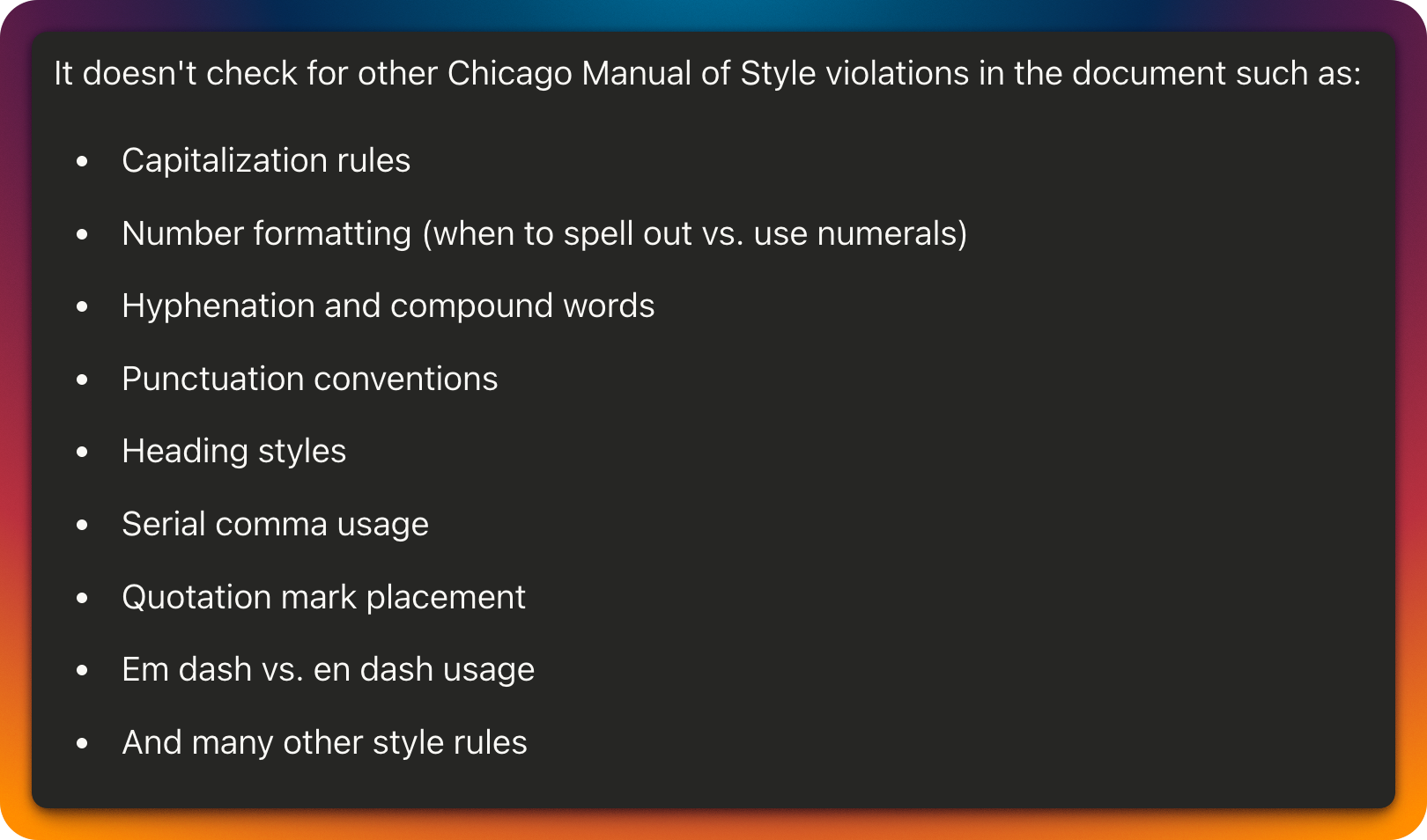
Building such a skill would take a great deal of time, and I wouldn't include it in the current bundles.